[SZ7]⇒ PDF Free Modernism and Japanese Culture
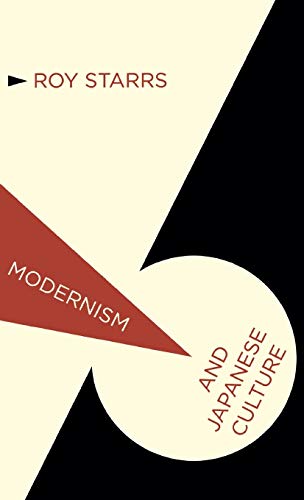
Tapa dura – 15 noviembre 2011

You can download in the form of an ebook: pdf, kindle ebook, ms word here and more softfile type. Modernism and Japanese Culture, this is a great books that I think.

Descripción del productoCríticas'With this, Starrs has picked up where he left off from his previous trilogy on Japanese literature, providing readers with another informative and challenging study. In so doing, he provides us with fresh insights into a topic that has been restored to a leading place in a variety of debates in recent years: Japan's approach to the modernist agenda when reassessed against the backdrop of postmodernist discourse. Once more, we are indebted to Starrs for his clear and concise analysis and attention to detail.' - Mark Williams, Chair, School of Modern Languages and Cultures, University of Leeds, UKDescripción del libroAn in-depth and comprehensive account of the complex history of Japanese modernism from the mid-19th century 'opening to the West' until the twenty-first century globalized world of 'postmodernism'Biografía del autorROY STARRS teaches Japanese and Asian Studies at the University of Otago, New Zealand. He has published widely on Japanese literature, art and culture, including books on Yukio Mishima, Yasunari Kawabata and Naoya Shiga. He has also edited three books on Japanese and Asian nationalism and globalization. His edited book, Politics and Religion in Modern Japan: Red Sun, White Lotus, is forthcoming from Palgrave in 2011.Leer más
An in-depth and comprehensive account of the complex history of Japanese modernism from the mid-19th century 'opening to the West' until the 21st century globalized world of 'postmodernism.' Its concept of modernism encompasses not just the aesthetic avant-garde but a wide spectrum of social, political and cultural phenomena.
Offering an in-depth and comprehensive account of the complex history of Japanese modernism, in this book Roy Starrs considers the concept of modernism as encompassing not just the aesthetic...
It's almost impossible to understand modern day Japanese culture without reading or knowing at least one or two manga and anime. From high school life, sports competition, romantic love stories, to alien invasions, these mediums have genres for almost everything.
During the first half of the twentieth century Japan's traditional art and aesthetics interacted with European life and culture, resulting in a pulsating era of Japanese modernism and the creation of Asian Art Deco architecture, paintings, prints, design and fashion.
The Relationship Between Japanese and Modernist Architecture The Modernist movement began in the early twentieth century when architects and designers sought to create a new, better society after...
The center of the world's largest metropolitan area, Tokyo has long been a hypermodern hub for technological and cultural innovation. This is, after all, the birthplace of bullet trains, Nintendo,...
Modernism And Japanese Culture, By R. Starrs. The established technology, nowadays support every little thing the human needs. It consists of the everyday tasks, jobs, workplace, amusement, as well as more. Among them is the fantastic web link and computer system.
Japan's unique culture is a fascinating blend of old and new. With deeply-rooted customs and a continuously-evolving lifestyle, Japan is both proudly traditional and ultramodern. This is a nation that celebrates its strong cultural identity, from food and everyday etiquette to art and education.
Japanese culture is ancient, diverse, divine, and influences various facets of modern Japan even today. From diet to festivals, sports to fashion, the culture is ever-present both in the country and afar. Some of the most prominent aspects of Japanese culture are discussed below. 8.
Japan is renowned worldwide as a nation steeped in a culture that combines both tradition and modernity. Thousands of years as an isolated island country allowed Japan to undergo various cultural evolutions in solitude, creating a truly unique traditional culture.
HUMANITIES INSTITUTE JAPANESE CULTURE-Early Modern Period Marvin Marcus, PhD TOKUGAWA JAPAN (1600-1868) Overview The outcome of the late 16th-century reunification process enabled Ieyasu, the Tokugawa clan chief, to establish a new regime\u2014 the third and final Shogunate.
The term 'modernism' is commonly used to describe some of the literary and cultural production of the early twentieth century in China, Japan, and Korea, but the range of its application and its relevance to East Asia remain subjects of debate. 1 There was widespread interaction with Western authors, artists, and avant-garde movements, ranging from direct emulation ('Japanese futurism') to movements found only in the region (new sensationism).
Japanese culture is multifaceted and very distinctive, having evolved rapidly in the past century. The advancements of technology, the government's adoption of democratic rights and the country's population boom have introduced new lifestyles to its people. These modern developments can often seem inconsistent with the traditional virtues of Japanese culture.
Popular & Modern Japanese Culture Source: japan.travel. Japanese popular culture is a culture originating from Japan that is recognized, enjoyed, disseminated and is the way of life of the majority of Japanese society in general. Popular Japanese cultures such as fashion and TV dramas have now entered the Asian region in depth.
JAPANESE CULTURE & SOCIETY Religion & Beliefs: Shinto and Buddhism 84%, other 16% (including Christian 0.7%) Shinto dates back to ancient times when people believed that the natural world possessed Kami, a Shinto deity or divine spirit. Buddhism came from China in the 6th Century and the two religions have co-existed in Japan from that time.
This is why the Japanese can come across as guarded with information and opinions. Until you are part of their group, you will remain an outsider. 7. Cleanliness is cultured. The Japanese are a clean people. From a young age, through school and into the workplace there is culture of cleanliness and hygiene.
The dual influences of East and West have helped construct a modern Japanese culture that offers familiar elements to the Westerner but that also contains a powerful and distinctive traditional cultural aesthetic.
Modern architecture in Japan tends to be characterized by a few things. First, it blends the traditional Japanese aesthetics of simplicity and purity with modernist values. This is seen in the ...
Japanese Culture. Japan has a fascinating and multifaceted culture; on the one hand it is steeped in the deepest of traditions dating back thousands of years; on the other it is a society in a continual state of rapid flux, with continually shifting fads and fashions and technological development that constantly pushes back the boundaries of the possible.
Japanese design history. The notion of "Japanese Modernism" has continually been slapped on past Japanese graphic design 7 that incorporated elements of the Western Avant Garde without looking closer at what truly constitutes a modernizing force in the history of Japanese design culture. While World War II left so few remains of graphic ...
Japan is a country of diverse customs and culture, while on the other hand, it is one of the most technologically advanced countries in the world. This is what makes it so unique; the mix of tradition and modernity, that results in a wonderful blend appealing most to tourists and people belonging to different countries.
Buy Modernism and Japanese Culture 2011 by Starrs, R. (ISBN: 9780230346444) from Amazon's Book Store. Everyday low prices and free delivery on eligible orders.
The culture of Japan has changed greatly over the millennia, from the country's prehistoric J\u014dmon Period, to its contemporary modern culture, which absorbs influences from Asia and other regions of the world. Japan's indigenous culture originates primarily from the Yayoi people who settled in Japan between 1000 BCE and 300 CE.
A New Exhibition Highlights Modernism's Debt to Japanese Architecture Shofuso and Modernism: Mid-Century Collaboration Between Japan and Philadelphia explores the artistic interconnections between Antonin and No\u00e9mi Raymond, George Nakashima, and Junzo Yoshimura.
To really understand Japan, it's vital to get a rounded view of the Land of the Rising Sun by reading the best books on Japanese culture and history - both modern and ancient. From World War II to today, via the rise of industry, animation, and video game culture.
The Japanese culture cannot be bracketed simply because it contains various elements, the Japanese culture in a period from ancient times to the medieval period was affected by neighboring countries in Asia around China, and in the period from early modern times to modern times after the Meiji period was affected by western countries.
Japanese Culture, Traditions and Customs: Lifestyle Facts to Know Before You Go. 1. Remove Your Shoes. In Japanese culture, it is seen as good and essential manners to remove your shoes upon entering a home, as well as some restaurants, to ensure the floors and tatami mats stay as clean as possible. This kind of cleanliness is sought after as ...
4 Facets of Modern Japanese Culture that Everyone Should Know About 1. Capsule Hotels. Also called pod hotels, this style of hotel became popular in Japan as cheap overnight rooms for salarymen (office workers) who work long hours. These capsule rooms usually consist of just a bed, air conditioning, outlets, and a TV. The room is the size of a ...
Comments
Post a Comment